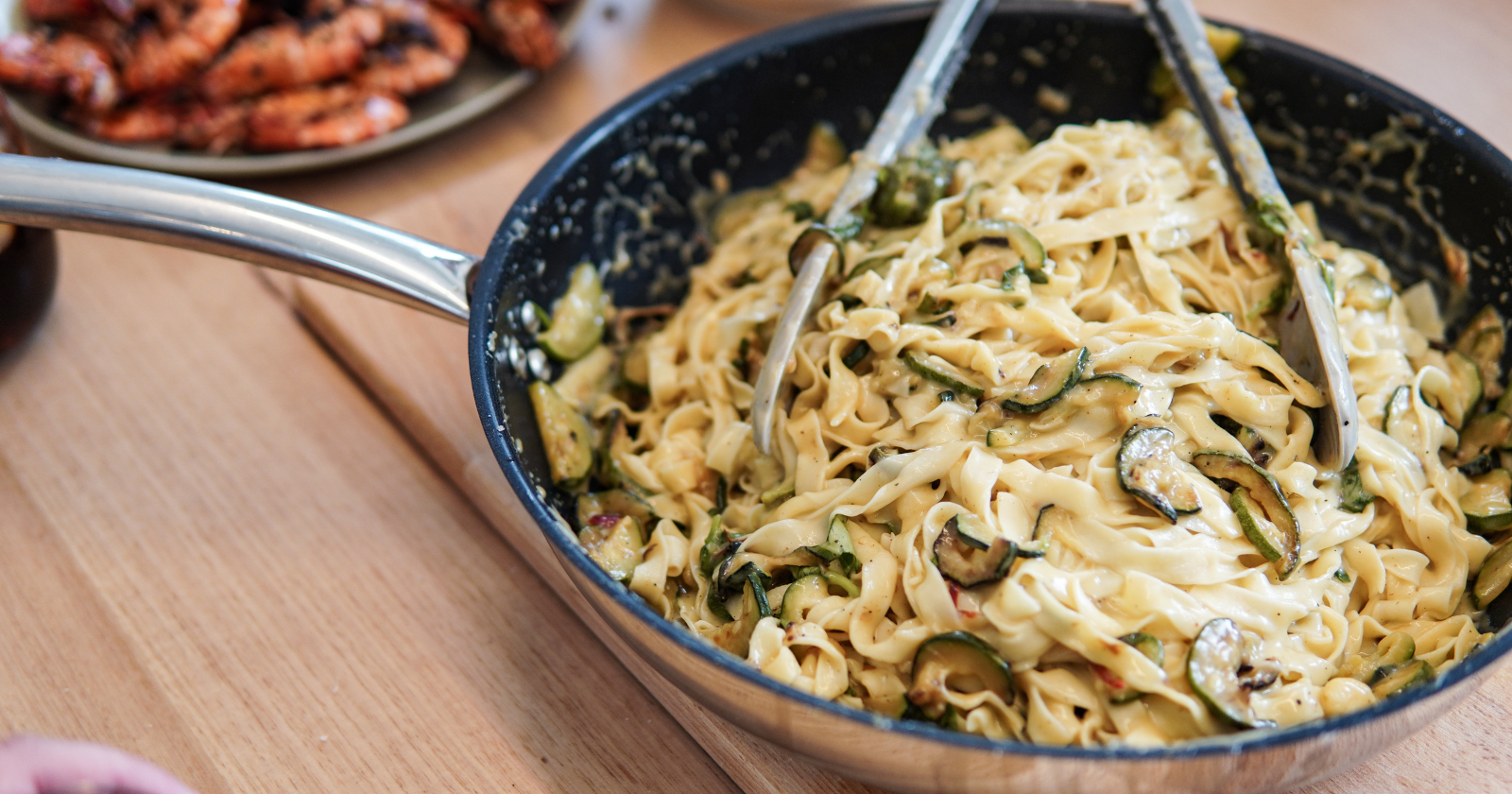
The creamiest vegetarian pasta you’ll make this week takes 20 minutes and one pan — and the secret has nothing to do with cream
Look, I’ll be straight with you. Most people think creamy pasta requires dairy. They’re convinced you need heavy cream, butter, or at least a mountain of cheese to get that silky, restaurant-quality sauce that coats every strand of pasta perfectly.
They’re wrong.
The secret to the creamiest pasta you’ve ever made lives in that box of dried pasta sitting in your pantry right now. It’s the starchy cooking water that most home cooks pour straight down the drain. That cloudy, seemingly worthless liquid is pure gold when you know how to use it.
I learned this technique from watching an Italian cook make the best cacio e pepe using nothing but pasta water, pecorino, and black pepper. They laughed when I asked about cream. “Why would I ruin it?” they said, stirring the wooden spoon in figure eights.
The science behind starchy pasta water
When pasta cooks, it releases starch into the water. This starch acts as a natural emulsifier, binding oil and water together to create a smooth, glossy sauce that clings to your pasta like it was meant to be there.
Think about it this way. You know how corn starch thickens sauces? Same principle, except the pasta does the work for you. The key is controlling the concentration of that starch.
Most recipes tell you to use a huge pot of water for pasta. Ignore them. You want less water, not more. I use just enough water to barely cover the pasta in my widest skillet. This creates a super-concentrated starchy liquid that transforms into sauce magic.
The pasta essentially cooks in its own thickening agent. As the water reduces, the starch concentration increases. By the time your pasta hits al dente, you’ve got a powerful sauce base waiting to happen.
Why one pan changes everything
Using one pan isn’t just about fewer dishes, though that’s a nice bonus. It’s about building layers of flavor in the same vessel while preserving every bit of that precious starch.
Start by sautéing your aromatics directly in the pan. Garlic, shallots, maybe some cherry tomatoes or mushrooms. Whatever vegetables you’re using, they release their flavors into the oil, which becomes the foundation of your sauce.
Then add your pasta and water to the same pan. The pasta absorbs those flavors as it cooks. Nothing gets lost. No flavors get diluted in a separate pot of boiling water.
I discovered this method during a particularly chaotic week when my kitchen space was limited. One working burner, one pan, and a desperate need for real food. Necessity forced me to consolidate, and the result was better than anything I’d been making with my full kitchen setup.
Sometimes constraints push us toward better solutions. In cooking, as in life, limitations often spark the most creative breakthroughs.
The technique that makes it work
Start with room temperature water, not boiling. I know this sounds wrong, but trust the process. Cold water extracts maximum starch from the pasta as everything heats up together.
Use short pasta shapes like penne, rigatoni, or orecchiette. They cook more evenly in shallow liquid than long strands. Save your spaghetti for traditional methods.
Keep the heat at medium-high. You want a vigorous simmer, not a rolling boil. Stir every couple of minutes to prevent sticking. The pasta will look wrong at first, sitting in too little water. Resist the urge to add more liquid.
About halfway through cooking, the magic starts. The water turns cloudy and reduces. The pasta begins to look creamy even though you haven’t added anything creamy. This is your visual cue that the starch is working.
Taste frequently near the end. You want the pasta just shy of al dente when you turn off the heat. It’ll finish cooking in its own heat while you complete the sauce.
Building your sauce without dairy
Once your pasta is ready, the real fun begins. Turn off the heat and add your flavor bombs. Nutritional yeast gives an umami punch without cheese. A splash of good olive oil adds richness. Lemon juice brightens everything up.
The key move happens next. Stir vigorously for 30 seconds. The residual heat and agitation emulsify everything into a glossy sauce. Add pasta water by the tablespoon if things look too thick. The sauce should flow like heavy cream.
Fresh herbs go in last. Basil, parsley, or oregano from my balcony garden. Growing herbs transformed my cooking more than any technique. There’s something grounding about snipping fresh basil you’ve nurtured from seed. It connects you to your food in a way that store-bought never can.
For protein, white beans work beautifully. Mash half of them before adding. They break down slightly, adding body to the sauce while keeping some texture. Chickpeas work too, especially if you crisp them first in the same pan before adding water.
Variations that never fail
My go-to combination is cherry tomatoes, garlic, and spinach. The tomatoes burst and create their own sauce component. The spinach wilts into silky ribbons. A handful of nutritional yeast at the end makes it taste like comfort food without the heaviness.
For something earthier, mushrooms and thyme create an almost stroganoff-like richness. The mushroom liquid becomes part of your sauce base. Add a splash of soy sauce for depth.
Roasted red peppers blended with some of the pasta water create an incredible pink sauce. No cashew cream needed. The starch and peppers do all the work.
You might have read my post on building kitchen confidence through repetition. This technique exemplifies that philosophy perfectly. Master the basic method, then endless variations become possible.
The mindfulness of simple cooking
There’s meditation in watching pasta transform water into sauce. No rushing, no complicated steps, just patient observation and gentle stirring. It reminds me why I started cooking more simply in the first place.
Complex recipes often distract us from the cooking itself. We’re so focused on following instructions that we miss the sensory experience. This one-pan method brings you back to basics. You smell the garlic blooming in oil. You see the exact moment the starch begins working. You taste the pasta evolving from raw to perfect.
Cooking this way becomes less about the end result and more about the process. Though ironically, the end result is usually better when we’re fully present during the cooking.
My evening routine now often includes making a simple pasta like this. After a long walk, while my tea kettle heats up, I can have dinner ready before the water boils. It’s become a transition ritual from day to evening, work mode to rest mode.
Making it your own
This technique is a framework, not a rigid recipe. Once you understand how starch and water create creaminess, you can adapt it to whatever’s in your fridge.
Last week I used leftover roasted vegetables and the last of my basil before the first frost hit. The week before, just garlic, red pepper flakes, and parsley. Both were perfect because I understood the underlying principle.
Stop draining away your pasta water. Stop reaching for cream when you want creamy. Start trusting that simple techniques, properly executed, beat complicated recipes every time.
Your pasta will never be the same. Neither will your confidence in the kitchen. Sometimes the best discoveries are hiding in plain sight, in the things we’ve been throwing away all along.