
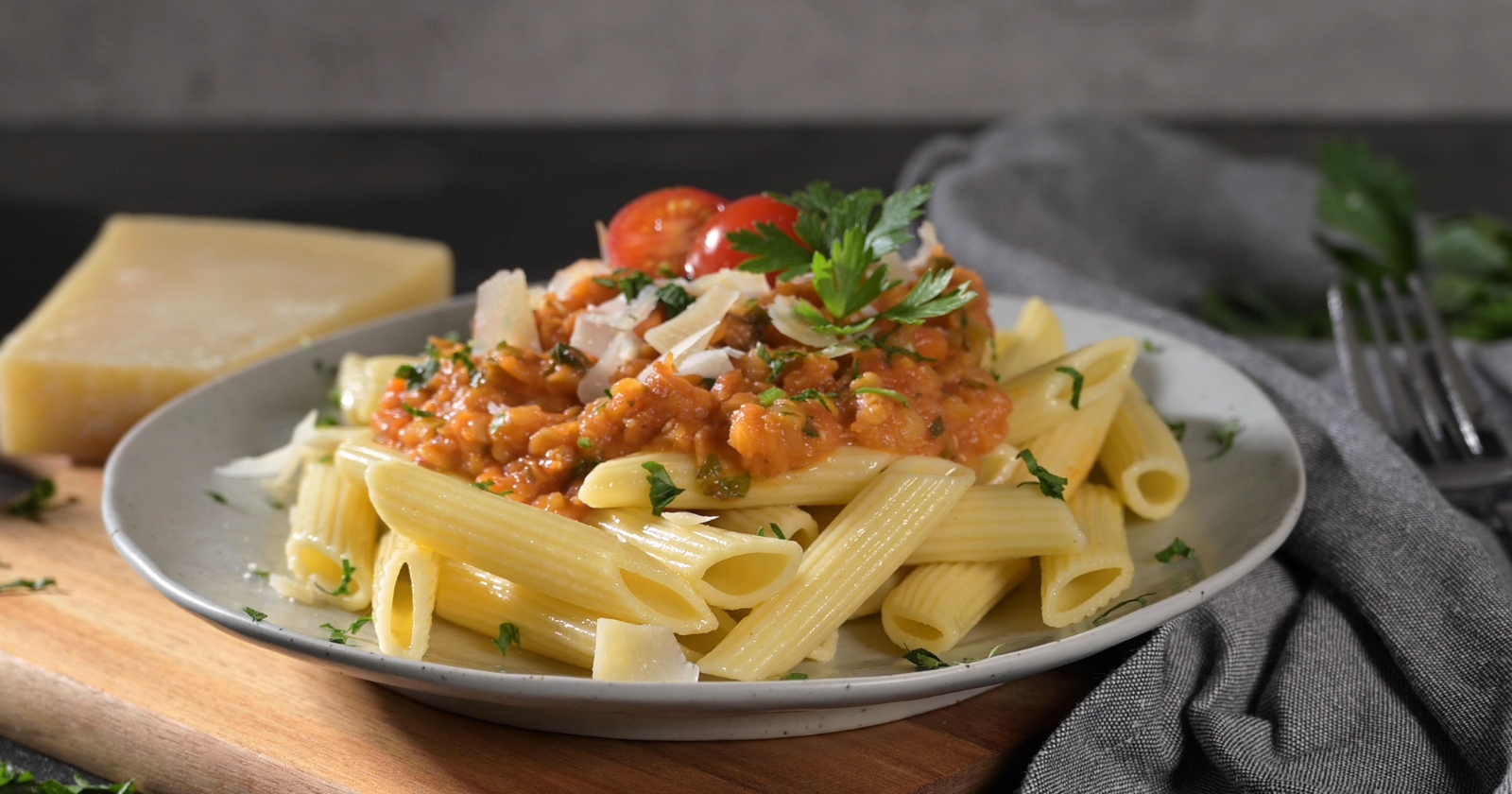
How to make a proper vegetarian bolognese that’s rich, deep, and doesn’t taste like it’s missing anything
The biggest mistake people make with vegetarian bolognese? They try to replace the meat instead of building something entirely new. I’ve watched countless home cooks dump lentils into tomato sauce, call it a day, and wonder why their dinner tastes like disappointment with a side of regret.
Real vegetarian bolognese isn’t about substitution. It’s about understanding what makes traditional bolognese work – the depth, the richness, that savory complexity that makes you close your eyes on the first bite – and recreating those qualities through different means.
The foundation matters more than you think
Traditional bolognese gets its depth from the slow breakdown of meat proteins and the fond that develops as it browns. Without meat, you need to be more intentional about building flavor from the ground up.
Start with your soffritto, but double down on it. Where a meat version might use one carrot, one celery stalk, and half an onion, I use two of each. Dice them smaller than you think you should – we’re talking 3mm cubes. The smaller the dice, the more surface area caramelizes, and the more sweetness you extract.
Here’s what changes everything: cook that soffritto for 15 minutes. Not five. Not ten. Fifteen full minutes over medium-low heat, stirring every couple of minutes. You want the vegetables to surrender completely, turning golden and jammy. This is your flavor foundation. Rush it, and everything that follows will taste flat.
The same principle applies to life – the unglamorous foundation work determines whether what you build on top will last. Nobody sees those fifteen minutes of patient stirring, but everyone tastes the difference.
Your secret weapons for umami depth
Meat brings umami naturally. In vegetarian cooking, you have to be strategic about it. My arsenal includes dried porcini mushrooms, tomato paste, soy sauce, and nutritional yeast. Each plays a specific role.
Soak 20 grams of dried porcini in hot water for 20 minutes. Chop them fine and add them after your soffritto is ready. The soaking liquid? That’s liquid gold – strain it through a coffee filter and add it to your sauce. It brings an earthy depth that makes people assume there’s meat in the dish.
Tomato paste needs proper treatment. Add three tablespoons to your vegetables and cook it for two minutes, stirring constantly. You want it to darken slightly and coat everything. This caramelization transforms the paste from sharp and acidic to rich and sweet.
A tablespoon of soy sauce might sound weird in Italian cooking, but it adds a savory backbone without announcing itself. Same with two tablespoons of nutritional yeast stirred in at the end – it brings a subtle richness that your brain interprets as satisfaction.
The protein that actually works
Forget plain lentils. I use a combination of green lentils and finely chopped walnuts. The lentils bring body and protein, while the walnuts add texture and a subtle richness that mimics ground meat’s fattiness.
Cook your lentils separately until they’re tender but still hold their shape. Undercooked lentils will never soften properly in the acidic tomato sauce. Overcooked ones turn to mush. You want that sweet spot where they’re creamy inside but intact.
For the walnuts, pulse them in a food processor until they resemble coarse breadcrumbs. Toast them in a dry pan until fragrant, then add them to your sauce in the last 30 minutes of cooking. They absorb the flavors while maintaining a pleasant bite.
I learned this combination during a trip to Lisbon, where a tiny vegetarian restaurant served something similar. The owner told me the secret wasn’t finding the perfect meat substitute but creating something so good that you forget you’re looking for meat in the first place.
Time is your friend
This sauce needs three hours. Not two. Not one. Three unhurried hours of gentle simmering. I know that sounds excessive in our world of 30-minute meals, but this is where the magic happens.
During that time, the tomatoes break down and caramelize. The vegetables meld into the background. The mushrooms release their essence. Everything marries into something greater than its parts.
Keep the heat low – just enough for occasional bubbles to break the surface. Stir every 20 minutes. Add water or vegetable stock if it gets too thick. The sauce should be rich enough to coat pasta but not so thick it sits on top like spackling paste.
This slow cooking process mirrors personal growth. Real change doesn’t happen overnight. It happens through consistent, patient effort over time. The sauce that seems to be doing nothing for the first hour is actually developing complexity you can’t rush.
The finishing touches that elevate everything
In the last 30 minutes, add a parmesan rind if you have one. Even vegetarian parmesan works. The rind won’t melt completely, but it infuses the sauce with a subtle nuttiness. Remove it before serving.
Fresh herbs go in at two different times. Add a handful of fresh basil leaves in the last 10 minutes of cooking. They’ll wilt and integrate into the sauce. Then, right before serving, tear more fresh basil over the top. This double layer of herbs – cooked and fresh – creates depth.
A splash of good balsamic vinegar at the end brightens everything without making it taste vinegary. Start with a teaspoon, taste, and add more if needed. You’re looking for that moment when the flavors suddenly pop into focus.
Finally, and this is crucial: let the sauce rest off the heat for 10 minutes before serving. This resting period allows the flavors to settle and meld. It’s the difference between good and extraordinary.
Bringing it all together
The vegetarian bolognese that emerges from this process doesn’t taste like it’s missing anything because it isn’t. It’s not trying to be meat sauce. It’s something entirely its own – rich with umami, complex from long cooking, satisfying in a way that has nothing to do with meat.
Serve it with wide ribbons of pappardelle or tube pasta that catches the sauce. Finish with good olive oil and freshly grated parmesan. Watch as meat-eaters clean their plates without once asking where the meat is.
This approach to cooking reflects a larger truth about satisfaction and fulfillment. When you stop trying to replicate what you think you should want and start building something authentic from quality ingredients and patience, you create something that stands on its own merit.
The best vegetarian bolognese doesn’t apologize for what it lacks. It celebrates what it is: proof that limitations often lead to the most creative solutions, and that with the right technique and patience, plant-based cooking can be every bit as rich and satisfying as anything else you put on the table.