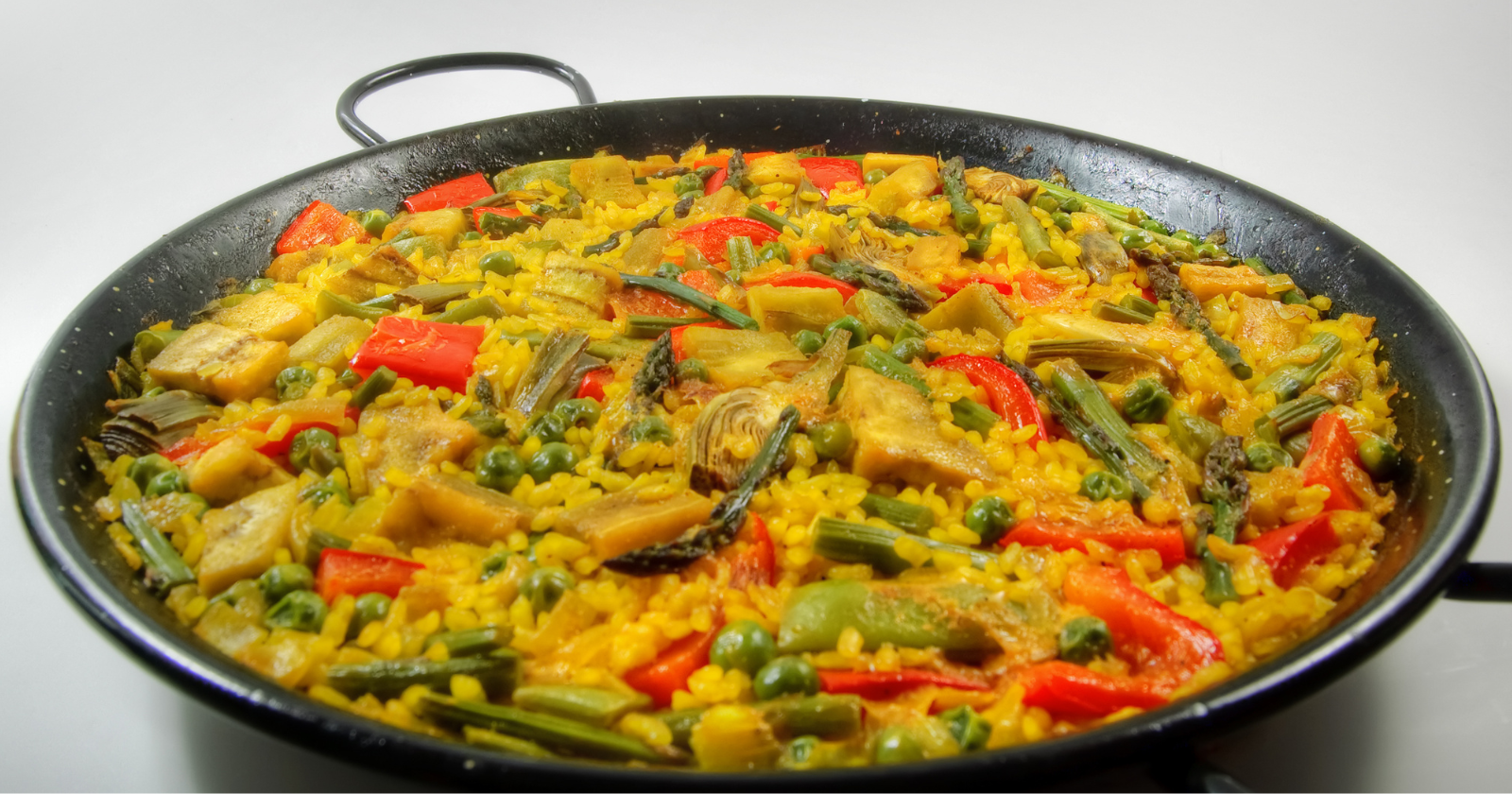
How to make a proper vegetarian paella that has the crust, the depth, and the drama the dish deserves
The biggest mistake people make with vegetarian paella isn’t leaving out the meat.
It’s treating it like a stirred risotto instead of letting it develop that gorgeous, crispy bottom layer Spanish cooks call socarrat. I’ve watched too many home cooks nervously poke and prod their paella, robbing themselves of the very thing that makes this dish spectacular.
Real paella demands patience and a bit of courage. You need to resist every instinct telling you to stir, to fuss, to interfere. The same restraint that helps us grow in other areas of life applies here: sometimes doing less gives you more.
Understanding what makes paella special
Traditional paella from Valencia gets its character from three things: the wide, shallow pan that lets liquid evaporate quickly; the intense heat that creates the crust; and the absolute refusal to stir once the rice goes in. That last part feels wrong to anyone raised on risotto or pilaf, but it’s non-negotiable.
The drama comes from contrast. Tender rice on top, crispy golden crust below. Sweet peppers against smoky paprika. The brightness of lemon cutting through rich saffron. Without meat to lean on, vegetarian paella needs these contrasts even more.
I learned this the hard way during a cooking class in Europe years ago. The instructor physically moved my hand away from the pan when I reached for the spoon. “The rice knows what to do,” she said. “Your job is to create the right conditions and get out of the way.”
Building your flavor foundation
Great vegetarian paella starts with homemade stock. Simmer onion scraps, carrot ends, parsley stems, bay leaves, and a few peppercorns for 45 minutes. Add dried mushrooms if you have them. This isn’t optional. Boxed vegetable broth tastes like salted dishwater compared to what you can make yourself.
While the stock simmers, prep your vegetables. You want things that hold their shape and contribute distinct flavors. Artichoke hearts, romano beans, lima garrofó if you can find them. Cherry tomatoes halved. Red peppers in strips. Save delicate vegetables like asparagus tips for the end.
The real secret weapon is your sofrito. Grate ripe tomatoes on a box grater, discarding the skin. Cook this pulp slowly in olive oil with minced garlic until it turns dark and jammy. This concentrated base adds the depth that meat would typically provide.
The rice rules everything
Spanish bomba rice absorbs three times its volume in liquid without turning mushy. If you can’t find it, CalRose works as a backup, but never use arborio. Its high starch content turns paella into mush.
The ratio matters: one part rice to three parts hot stock. Not warm, not room temperature. Hot. This keeps the cooking tempo steady and prevents the temperature from dropping when you add the liquid.
Here’s where technique becomes meditation. Arrange your rice in a cross pattern across the pan, just level with the liquid. From this moment forward, you don’t touch it. You can gently shake the pan occasionally, but no stirring. None.
Managing heat like a conductor
Start with blazing high heat to get everything bubbling. After ten minutes, reduce to medium. The edges should bubble steadily while the center maintains a gentle simmer. If you’re using a home stovetop, rotate the pan quarter turns every few minutes to ensure even cooking.
The hardest part comes at minute fifteen. The liquid will be mostly absorbed. The rice looks done. Every fiber in your being wants to add more stock. Don’t. This is when the magic happens.
Crank the heat back to high for the final two to three minutes. Listen for the crackling sound. Smell for that toasted, almost burnt aroma. You’re creating the socarrat, that crispy bottom layer that separates good paella from extraordinary paella.
Reading the signs
Perfect paella tells you when it’s ready. The rice forms small volcanoes where steam escapes. The edges look dry and slightly golden. That crackling sound shifts from aggressive to gentle. A properly developed socarrat should require a spoon’s edge to scrape it from the pan.
If you’re unsure, tilt the pan slightly. No liquid should run to the lower side. Stick a spoon straight down to the bottom. You should meet firm resistance from the crust.
Turn off the heat and let it rest for five minutes. This isn’t just about temperature. The remaining moisture equalizes throughout the dish, and the socarrat firms up properly.
The finishing touches that matter
While it rests, char some lemon halves cut-side down in a dry skillet. The caramelized surface adds smoky sweetness when squeezed over the finished dish. Arrange them around the pan’s edge before serving.
Good alioli makes everything better. Mash garlic with salt into a paste, then slowly whisk in olive oil until thick and creamy. Some add egg yolk for stability, but traditional versions use only garlic, salt, and oil. The pungent creaminess balances the crispy, savory rice perfectly.
Fresh herbs go on at the very end. Flat-leaf parsley, obviously. But try fresh oregano or marjoram too. They add a brightness that dried herbs can’t match.
Why this matters beyond the kitchen
Making proper paella taught me something about letting go of control. We spend so much energy trying to manage every outcome, stirring constantly through life, afraid that stillness means something’s going wrong.
But sometimes the best results come from setting up the right conditions and trusting the process. The rice doesn’t need your constant intervention. Neither does every project, relationship, or goal you’re nurturing.
That socarrat only forms when you resist the urge to interfere. It requires faith that the sizzling and crackling aren’t signs of failure but transformation. The same patience that creates extraordinary paella creates space for growth in other areas.
Trust the process
Your first attempt might not be perfect. Mine certainly wasn’t. The crust might be uneven, or you might add too much liquid. That’s fine. Each time you make paella, you learn to read the signs better. You develop an ear for the right sizzle, a nose for the perfect toast level.
More importantly, you learn to sit with discomfort. To resist unnecessary action. To trust that you’ve created the right conditions for something extraordinary to happen.
That’s the real lesson hiding in this ancient dish. Sometimes the most powerful thing you can do is step back and let the heat do its work. The drama, the depth, the perfect crust, they all come from knowing when to act and when to simply witness.
Next time you’re tempted to stir, remember: the best paella, like the best outcomes in life, often come from doing less, but doing it with complete intention and presence.