
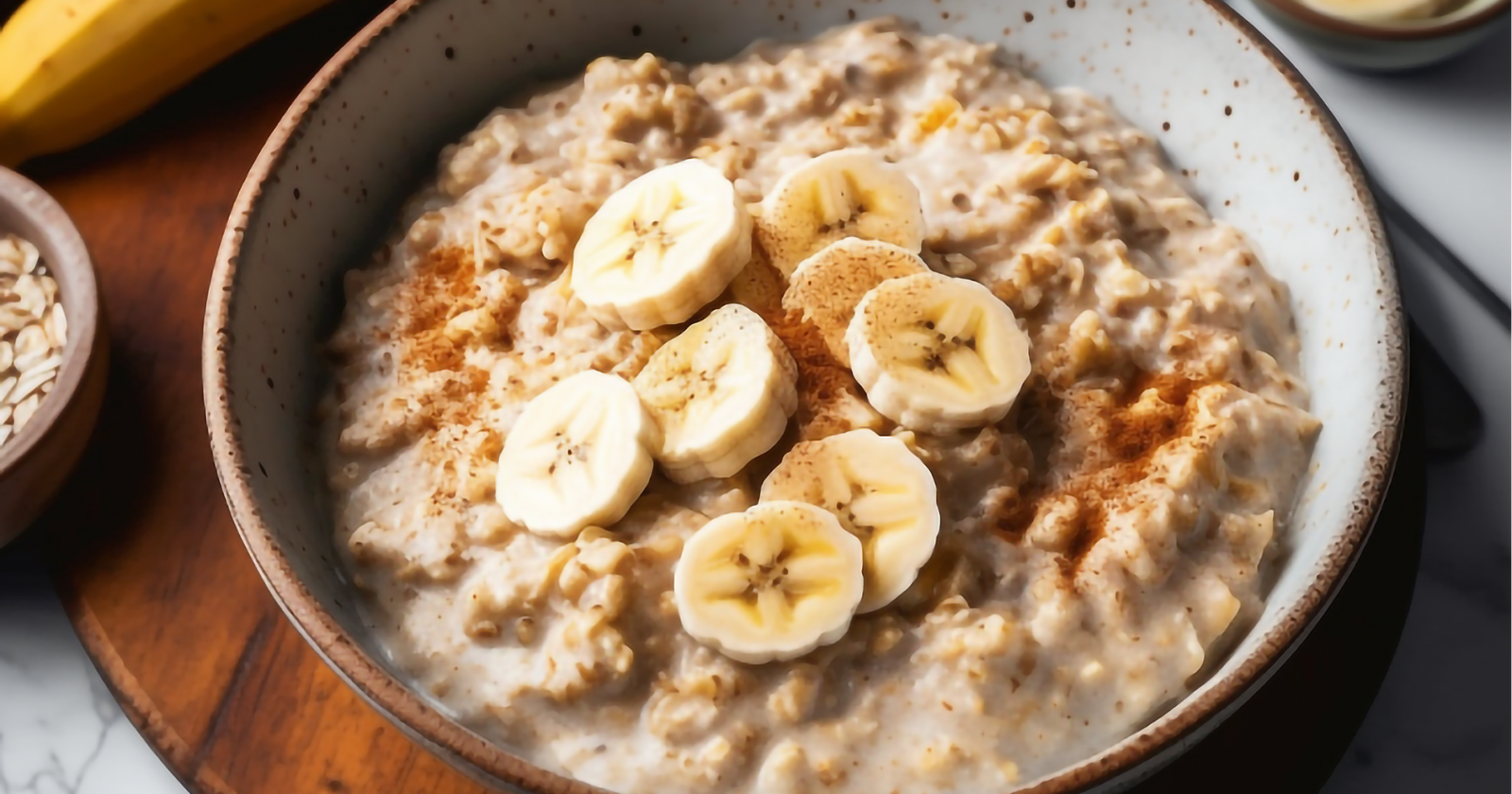
I ate the same vegetarian breakfast for 30 days and here’s what happened to my energy levels
I used to be the queen of breakfast chaos. Some mornings it was toast with whatever spread hadn’t expired. Others, I’d skip it entirely and wonder why I felt like a zombie by 10am. Then came the baby, and suddenly even toast felt ambitious.
So I decided to try something radical: one breakfast, every single day, for 30 days straight. No decisions, no variety, no excuses. I chose overnight oats with banana, chia seeds, a handful of walnuts, and a drizzle of maple syrup.
Simple, vegetarian, and something I could prep the night before while half asleep. Here’s what actually happened to my energy levels.
Why I chose this particular breakfast
I didn’t pick overnight oats randomly. I wanted something that combined complex carbohydrates, protein, healthy fats, and fiber. According to research from the American Journal of Clinical Nutrition, meals that balance these macronutrients help maintain steadier blood sugar levels throughout the morning.
The chia seeds and walnuts brought omega-3s and staying power. The banana added natural sweetness plus potassium. And oats? They’re a slow-release energy source that keeps you fueled without the spike and crash of sugary cereals.
Honestly, I also chose it because I could assemble everything in under three minutes the night before. With a baby who treats 5am like a party, that mattered more than I’d like to admit.
The first week felt surprisingly hard
You’d think eating the same thing would be easy. It wasn’t. By day four, I was already craving variety. I missed my weekend pancakes. I missed the spontaneity of deciding what sounded good.
But something interesting happened around day five. I stopped thinking about breakfast entirely. The decision fatigue vanished. I woke up knowing exactly what I’d eat, and that tiny bit of mental space felt oddly freeing.
My energy during that first week was inconsistent, but I suspect that had more to do with adjusting to the routine than the food itself. I was still reaching for coffee by mid-morning, still hitting a wall around 3pm.
Week two brought the first real shift
Around day ten, I noticed something. That desperate need for a second coffee? Gone. I was making it to lunch without the foggy, irritable feeling that usually crept in by 11am.
As nutritionist Rhiannon Lambert has noted, consistent eating patterns help regulate our circadian rhythms and metabolic responses. I think my body was finally settling into a predictable routine, and it seemed to appreciate the stability.
I also started sleeping slightly better, though I can’t say for certain the breakfast was responsible. Maybe knowing one less decision awaited me each morning helped me relax. Whatever the cause, I woke up feeling more rested.
The unexpected mental clarity
By week three, the physical energy improvements were nice, but the mental clarity surprised me more. I felt sharper in the mornings. Writing came easier. I wasn’t fighting through brain fog to form coherent thoughts.
There’s something to be said for removing small daily decisions. Psychologists call it decision fatigue, and as behavioral economist Dan Ariely has discussed, even minor choices drain our cognitive resources over time.
Breakfast had always been a tiny negotiation with myself. What do I want? What do we have? What’s quick enough? Eliminating that freed up mental bandwidth I didn’t realize I was spending.
What I learned about afternoon energy
The afternoon slump had been my nemesis for years. That post-lunch heaviness where productivity goes to die. I expected breakfast changes to help my mornings, but I didn’t anticipate the ripple effect on my afternoons.
Starting the day with balanced nutrition seemed to influence my lunch choices too. I wasn’t starving by noon, so I made calmer decisions. I ate reasonable portions. And without the morning blood sugar rollercoaster, my afternoons felt more stable.
I still had tired days, of course. I have a baby. Tiredness is basically my personality now. But the crushing, inexplicable exhaustion that used to hit around 3pm became less frequent.
Would I do it again?
By day 30, I’d genuinely grown to love my little overnight oats ritual. The consistency felt like self-care rather than restriction. I knew exactly how I’d feel after eating, and that predictability became comforting.
That said, I’ve loosened up since the experiment ended. Weekends now include the occasional lazy brunch or spontaneous smoothie. But weekday mornings? Still overnight oats. The energy benefits were real enough that I don’t want to lose them.
Sometimes the simplest changes create the biggest shifts. I went in expecting to white-knuckle through boredom and came out with genuinely better energy and one less thing to think about each morning.
Final thoughts
This experiment taught me that variety isn’t always the answer. Sometimes our bodies and minds crave consistency more than we realize. The steady energy, the mental clarity, the freedom from one small daily decision, it all added up to something meaningful.
If your mornings feel chaotic and your energy unpredictable, maybe the solution isn’t a fancier breakfast. Maybe it’s a simpler one, repeated until your body knows exactly what to expect.
Would I recommend everyone eat the same breakfast for a month? Not necessarily. But I’d encourage you to notice how much energy you spend on small choices, and ask whether that energy might be better used elsewhere.