
The vegetarian lunch you’ll actually look forward to making — and it uses whatever’s left in the fridge from Sunday
Here is the thing nobody tells you about Sunday meal prep: the leftovers are often better than the original meal.
Not because of some magic chemistry, though roasted vegetables do deepen overnight in ways that feel almost unfair. It is because by Tuesday lunchtime, you are hungry, you have about twenty minutes, and the bar for what counts as a good idea is beautifully low. That is exactly the window where this kind of lunch thrives.
I have been cooking vegetarian food for over a decade, and I have learned that the meals I look forward to most are almost never the elaborate ones. They are the ones where I open the fridge, see what Sunday left behind, and give it a second life that is genuinely better than just reheating it on a plate.
This is that lunch. It is not a recipe so much as a method — one that works with nearly any combination of cooked grains, roasted vegetables, or leftover legumes you happen to have on hand.
Start with what Sunday made
The foundation of this lunch is whatever you cooked over the weekend. In my house, Sunday is when I meal prep for the week — grains on the boil, a tray of vegetables in the oven, a pot of something spiced simmering on the stove. I genuinely love it.
Music on, the kitchen smelling of cumin or roasted garlic, my son doing his best to grab anything within reach. By the time it is done, I have a fridge full of components that are just waiting to be assembled into something good.
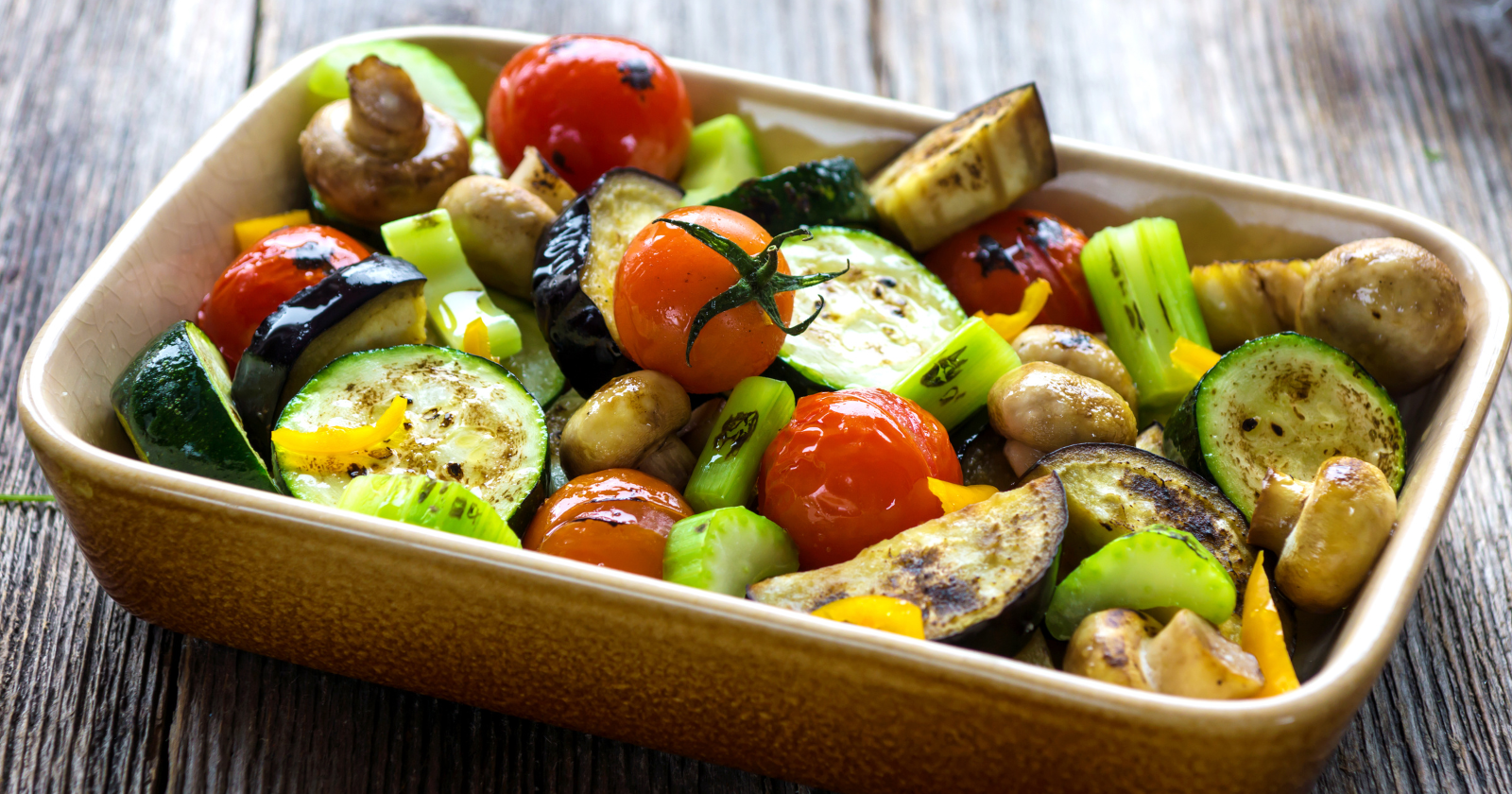
By midweek, those components are still there but starting to feel a little tired. That is where this lunch steps in. Think: cooked farro, brown rice, or lentils. Roasted sweet potato, cauliflower, zucchini, or whatever vegetables went in the oven. Maybe half a tin of chickpeas that got used in something else and never made it into a container. A handful of wilting spinach. Some herbs that are still clinging to life.
You do not need all of these things. You need some of them. That is the whole point.
The formula that makes it feel like a real meal
What separates a good fridge-clear-out lunch from a sad pile of leftovers is texture and contrast. You want something warm, something fresh, something creamy, and something with a little crunch. Hit those four notes and you will never feel like you are eating leftovers — you will feel like you made something.
Warm base: your leftover grains or legumes, reheated in a pan with a splash of olive oil and a pinch of salt. If you have roasted vegetables, add them here too. Let everything get a little colour in the pan rather than microwaving it into softness.
Something fresh: raw cucumber, halved cherry tomatoes, thinly sliced radish, or whatever is in the crisper drawer. Even a handful of rocket or spinach wilted briefly in the warm pan counts.
Something creamy: a spoonful of tahini thinned with lemon juice and water, a dollop of natural yoghurt, or hummus loosened with olive oil until it pours. This is the element that pulls everything together.
Something crunchy: toasted seeds, a handful of dukkah, crispy fried shallots from a jar, or even just good bread torn on the side.
That is your formula. Everything else is a flavour decision.
The sauce is doing the heavy lifting
I cannot overstate how much a good sauce changes this lunch. When I am cooking for a mix of vegetarians and non-vegetarians — which is most of the time, since my husband is not vegetarian — I have learned that the sauce is often what convinces people that the food is exciting, not just healthy. It is the same principle here.
The simplest version I come back to constantly: two tablespoons of tahini, the juice of half a lemon, a small garlic clove grated in, and enough cold water to make it pourable. Whisk it with a fork until smooth, taste it, adjust the salt. That is it. It works with almost every combination of grains and vegetables because it brings fat, acidity, and depth all at once.
If you have miso in the fridge, a teaspoon stirred into the tahini dressing takes it somewhere more savoury and complex. If you have harissa, a teaspoon loosened with olive oil and a squeeze of lemon becomes something bolder that works especially well with roasted cauliflower or sweet potato.
You do not need to make all of these. Pick one. That is tomorrow’s.
Three combinations that actually work
Because it helps to have a starting point, here are the three combinations I reach for most often depending on what Sunday happened to produce.
The first: brown rice, roasted sweet potato and red onion, chickpeas crisped in the pan, wilted spinach, tahini-lemon dressing, and a scattering of toasted pumpkin seeds. This is the one I make most frequently because it comes together in under fifteen minutes if the rice is already cooked.
The second: farro or pearl barley, roasted zucchini and capsicum, crumbled feta, fresh cherry tomatoes, a handful of fresh herbs if you have them, and a dressing of olive oil, red wine vinegar, and a pinch of dried oregano. This one is closer to a grain salad than a warm bowl, and it is particularly good in warmer weather.
The third: red or green lentils, roasted cauliflower, a spoonful of harissa stirred through the whole thing in the pan, fresh cucumber and mint on top, and a cooling spoonful of yoghurt to finish. The contrast between the spiced lentils and the cool yoghurt is what makes this one feel finished rather than thrown together.
A note on making it feel worth sitting down for
One of the things I think about a lot when it comes to weekday lunches is whether the food feels like something I actually made, or something I just assembled out of desperation. The line between those two experiences is mostly in the presentation and the final touches — not the effort involved.
A drizzle of good olive oil over the top before you eat. A few fresh herbs torn on at the last minute, even if it is just parsley from a bunch that is about to turn. A wedge of lemon on the side. A small handful of something crunchy. These are the things that make a bowl of leftover grains and vegetables feel like a lunch worth sitting down for rather than something you ate standing over the kitchen bench.
Since my son arrived, I have become more intentional than ever about cooking meals that work for a household where time is short and the fridge is full of odds and ends. The pressure of a baby who is not going to wait has made me a faster, less precious cook — and this kind of lunch is the result. It is fast, it is genuinely good, and it makes Sunday’s effort feel like it was worth it twice over.
Start with what is already in the fridge. Add a sauce worth eating. Sit down if you can. That is the whole thing.